+ Pros
- ✓5% on key business categories at $0 fee
- ✓Points transfer to Sapphire for travel
- ✓Employee cards at no extra cost
− Cons
- ✗3% foreign transaction fee
- ✗$25K annual cap on bonus categories
- ✗Personal guarantee required
Rewards Breakdown
| Category | Rate | Monthly Spend | Annual Value |
|---|---|---|---|
| Office Supplies/Internet/Phone | 5% | $200/mo | $120 |
| Gas & Dining | 2% | $300/mo | $72 |
| All Other | 1% | $1000/mo | $120 |
| Total Estimated Annual Rewards | $312 | ||
Perks & Credits
No annual fee for a business card with 5% categories.
Points pool with Sapphire Preferred/Reserve for airline/hotel transfers.
Add employee cards at no cost — all spending earns rewards to your account.
Covers new purchases against damage or theft for 120 days.
Source: CFPB Consumer Complaint Database. Complaints are not necessarily evidence of wrongdoing.
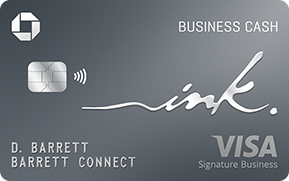
The Chase Ink Business Cash is the rare credit card that gets better the more you think about it. On the surface, it looks like a straightforward no-fee business card with some solid cash back rates. But spend five minutes with the fine print and you start to see what makes it genuinely interesting: a $0 annual fee paired with 5% back on the exact categories where small businesses bleed money — office supplies, internet, phone plans, and software subscriptions. For a solopreneur running a lean operation, this card can quietly put hundreds of dollars back in your pocket every year without you ever paying a cent for the privilege.
Who is this card for? Think of the freelancer paying $200 a month for software subscriptions, coworking internet, and a cell phone plan. Think of the small agency owner stocking up at Staples and paying for a dozen SaaS tools. Think of the Chase loyalist who already has a Sapphire Preferred sitting in their wallet and wants to funnel business spending into the same points ecosystem. The Ink Business Cash was built for operators like these — people who run real, asset-light businesses and want their everyday spending to work harder. If that describes you, this card deserves a very serious look.
The Annual Fee Math
There is no annual fee math to stress over here, because the Ink Business Cash charges $0 per year. That changes the calculus entirely. With a no-fee card, you are never in the position of asking whether you spent enough to "earn back" your membership cost. Every dollar of rewards you earn is pure net gain.
To put real numbers to it: if you spend $1,000 per month on office supplies, internet, phone, and software — which is not unusual for even a modest service business — you are earning 5% back on all of it, up to the $25,000 annual cap. That works out to $1,500 in cash back per year on that category alone, at zero cost to carry the card. Add in the sign-up bonus — $350 back after spending $3,000 in the first three months — and your first year looks even better.
The $25,000 annual spending cap on bonus categories is worth understanding clearly. Once you cross $25,000 in combined office supply, internet, and phone purchases in a calendar year, those transactions drop to 1% back. For most small businesses, $25,000 in that specific category is a ceiling they will never approach. But if your business runs heavy on software and telecom — think a growing agency with a dozen employees on company phones and a stack of enterprise SaaS licenses — you could hit that cap by September. If that describes your situation, you will want a backup card for overflow spending. More on that below.
The 2% back on gas and dining comes with the same $25,000 annual cap. At $2,000 per year in restaurant meals and fuel, that is $40 back — nothing to get excited about on its own, but also nothing you are paying extra for. It simply adds up in the background.
How This Card Fits Your Wallet
The Ink Business Cash is not trying to be your only card. It is trying to be your best card for a very specific slice of your spending — and it wants to work in concert with other cards in the Chase ecosystem.
Here is where the strategy gets interesting: the rewards you earn on the Ink Business Cash are technically Chase Ultimate Rewards points, but they are locked in cash back form unless you also hold a card that earns transferable Ultimate Rewards — like the Chase Sapphire Preferred or Sapphire Reserve. If you have one of those cards, you can pool your Ink Business Cash points into your Sapphire account and convert them to airline miles or hotel points. Suddenly that 5% back on your phone bill is not just cash — it is potentially 5x points toward a business class flight at a much higher redemption value.
If you are building a multi-card wallet, the Ink Business Cash pairs naturally with the Chase Sapphire Preferred on the personal side. Run your office supply, internet, and phone spending through the Ink Business Cash. Run travel and dining through the Sapphire Preferred. Transfer everything into a single Ultimate Rewards pool. This is the Chase trifecta strategy in a simpler, two-card form, and for small business owners who also travel for work, it is genuinely powerful.
The one scenario where this card falls flat as a primary card: international travel. A 3% foreign transaction fee means that every purchase you make abroad costs you an extra 3 cents on the dollar. If you travel internationally for business with any regularity, you will want a card like the Ink Business Preferred or the Sapphire Reserve in your pocket for those trips. The Ink Business Cash should stay home.
Employee cards are worth mentioning here. You can issue cards to employees at no extra cost, and all of their spending flows back into your rewards account. For a small business with even two or three employees making purchases in bonus categories, this can meaningfully accelerate your points accumulation without any added overhead.
One thing to be clear-eyed about: this card requires a personal guarantee, which is standard for small business credit cards but worth knowing going in. Your personal credit is on the line. The card also reports to business credit bureaus, which is a genuine benefit — every on-time payment is building your business credit profile, which matters when you eventually want to qualify for larger business loans or lines of credit without relying on personal credit alone.
The Bottom Line
The Chase Ink Business Cash earns its place in almost any small business wallet by doing something simple exceptionally well: returning 5% on the categories that cost lean businesses the most, with no annual fee eating into those returns. If your business spends meaningfully on office supplies, internet, phone, or software, this card will outperform nearly every competitor at the $0 fee tier. The real upside comes if you are already in the Chase ecosystem — because those rewards, pooled with a Sapphire account, are worth considerably more than their face value in cash. Skip it if you do significant business internationally or if your bonus category spending reliably exceeds $25,000 a year, but for everyone else, this is a very easy card to recommend.
Who This Card Is For
- →Solopreneurs who spend on office supplies, software, internet, and phone plans
- →Chase ecosystem builders who want free business points feeding into Sapphire
- →Small businesses that want employee cards without per-card fees
Who Should Skip This Card
- →International businesses — 3% foreign transaction fee
- →Heavy spenders above $25K/yr in bonus categories — the cap limits value
- →Anyone wanting lounge access or premium travel perks
How It Compares
| Card | Annual Fee | Best Rate | Score |
|---|---|---|---|
| Chase Ink Business Cash (this card) | $0 | 5% | 4.5/5 |
| Chase Freedom UnlimitedBest No-Fee Card with Category Bonuses | $0 | 1.5% | 4.5/5 |
| Capital One Quicksilver Cash RewardsBest No-Fee Card for Travel Spending | $0 | 1.5% | 4.3/5 |
| Blue Cash Preferred Card from American ExpressBest for Groceries | $95 | 6% | 4.4/5 |
Frequently Asked Questions
Explore More Cards
Last updated: 2026-03-30