Independent comparisons. No active credit card affiliate partnerships. How we make money · Data status
Best Travel Credit Cards of 2026
Top travel rewards cards with the best points, perks, and transfer partners.
Last reviewed: 2026-03-30. Card offers can change; check current issuer terms.
Our Top Picks at a Glance


Here is the complete article body:
Travel credit cards can be genuinely transformative for your finances — or an expensive mistake. A card charging $395 per year only makes sense if you're actually getting more than $395 in value back, whether through credits, rewards, lounge access, or some combination of the three. The problem is that most cards are marketed on headline numbers — "earn 10X miles!" — without showing you what that actually means for how you spend money or what you'd realistically redeem those miles for. That gap between marketing and reality is where cardholders quietly lose money.
To build this list, we evaluated every major travel card on five factors: net annual value after subtracting fees and adding back concrete credits, sign-up bonus size and how realistic the spending requirement is to hit, the quality of transfer partners (because not all points are worth the same), travel protections that actually matter (primary rental car insurance, trip delay coverage, cell phone protection), and lounge access. We also modeled a real spending profile — roughly $800/month on dining and groceries, $400/month on travel, and $600/month on everything else — to see which cards actually outperform their fees over 12 months.
The three cards below cover the strongest options available in 2026 across different priorities and price points. One is the best card for people who eat and travel. One is the best first premium travel card money can buy. And one is the most genuinely simple premium card on the market. All three are worth serious consideration depending on where you are in your financial life.
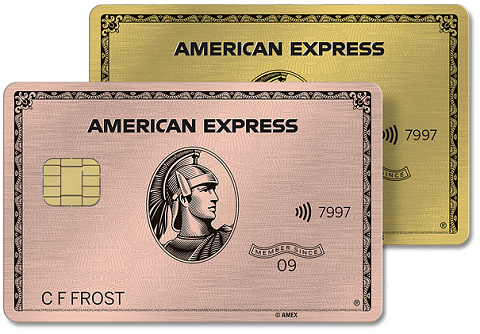
American Express Gold Card — Best for Dining & Groceries
Annual Fee: $325 | Editor Score: 4.8/5
If you spend real money on food — at restaurants, at the grocery store, or both — the Amex Gold Card is the highest-returning card available at its price point. You earn 4X Membership Rewards points at restaurants worldwide and 4X at U.S. supermarkets on up to $25,000 in annual grocery spending, plus 3X on flights booked directly with airlines. At a conservative valuation of 1.8 cents per Membership Rewards point, someone spending $800/month combined on dining and groceries is generating roughly $690 in annual rewards from those two categories alone. That's before the sign-up bonus.
The 100,000-point sign-up bonus after $6,000 in spending within six months is one of the most valuable offers currently available on any card. Transferred to Avianca LifeMiles or Air Canada Aeroplan and redeemed for business-class flights, those points can easily be worth $2,000 or more. Even at a conservative baseline — 1 cent per point — that's $1,000 in value for hitting a spending requirement most households clear naturally over six months.
The $325 annual fee looks reasonable once you account for the built-in credits: $120 per year in Uber Cash (credited monthly as $10, usable for Uber rides or Uber Eats), $120 in dining credits at Grubhub, The Cheesecake Factory, and select restaurants, $100 back for dining through Resy, and $84 per year in Dunkin' credits. That's $424 in annual credit value — $99 more than the card costs. If you're already spending on Uber and dining, you're effectively being paid to carry this card.
The real caveats are worth naming. American Express isn't accepted everywhere — particularly at smaller domestic merchants and in some international markets — so you'll want a Visa or Mastercard in your wallet as backup. And unlike the Capital One Venture X, the Amex Gold doesn't include airport lounge access. If Priority Pass or proprietary lounge access matters to you, the Gold Card doesn't deliver it.
Who should get it: Anyone spending $500/month or more between dining and groceries who will actively use the Uber Cash and dining credits. The 4X earn rate and massive sign-up bonus make this the highest-value card on this list for the right spending profile.
Chase Sapphire Preferred — Best Starter Travel Card
Annual Fee: $95 | Editor Score: 4.7/5
The Chase Sapphire Preferred has been the best entry-level travel card on the market for years, and in 2026 it's still the first card most people serious about travel rewards should get. For $95 per year, you earn 5X points on Chase Travel portal bookings, 3X on dining and streaming services, 2X on all other travel, and 1X everywhere else. The 75,000-point sign-up bonus after $5,000 in spending within three months is worth roughly $937 when redeemed through Chase Travel — and potentially far more when transferred to hotel and airline partners.
What makes the Sapphire Preferred exceptional isn't actually the earn rates — it's the transfer partner ecosystem. Chase Ultimate Rewards transfers 1:1 to 14 airline and hotel programs, including World of Hyatt, United MileagePlus, Southwest Rapid Rewards, British Airways Avios, and Air France/KLM Flying Blue. World of Hyatt in particular is one of the most valuable hotel programs in existence: 75,000 points can cover multiple nights at Park Hyatt properties that would otherwise cost $400–600 per night. No other card at this price point gets you into the same quality of transfer partnerships.
The annual credits make the $95 fee feel closer to negative. You get a $50 Chase Travel hotel credit each year, plus a complimentary DoorDash DashPass membership worth $120 annually (free delivery, reduced service fees). That's $170 in credits against a $95 fee — meaning the card effectively pays you $75 to carry it before you earn a single reward point.
The main limitation is Chase's 5/24 rule: if you've opened five or more credit cards from any issuer in the past 24 months, Chase will likely deny your application. That rule catches a lot of applicants by surprise. The $5,000 spending requirement for the bonus is also higher than some competitors, though it's achievable for most households within three months.
Who should get it: Anyone new to travel rewards who wants the best combination of a meaningful sign-up bonus, low annual fee, and access to Chase's industry-leading transfer partner network — particularly if you're interested in maximizing Hyatt hotel redemptions.
Capital One Venture X — Best Premium Travel Card for Simplicity
Annual Fee: $395 | Editor Score: 4.6/5
The Capital One Venture X is the rare premium travel card that actually delivers on its value proposition without requiring you to optimize every purchase or memorize rotating categories. You earn a flat 2X miles on every purchase, full stop — with elevated rates of 10X on hotels and rental cars and 5X on flights when booked through Capital One Travel. Most cardholders will find that the flat 2X base rate covers the vast majority of their spending without any mental overhead.
The $395 annual fee essentially nets to zero with modest effort. The card comes with a $300 Capital One Travel credit each year, redeemable against any flight, hotel, or car rental booked through the portal. It also awards 10,000 anniversary miles each year — worth roughly $100 toward travel — just for renewing. That's $400 in concrete annual value against a $395 fee. Unlike some premium card credits that require spending at specific merchants or arriving in exact $10 monthly increments, the $300 travel credit is flexible and easy to use.
Lounge access is one of the Venture X's strongest selling points among premium cards at this price tier. Cardholders get access to Capital One's own lounges (currently in Dallas, Denver, and Washington Dulles, with more opening) plus Priority Pass membership, which covers 1,300+ lounges worldwide. As of February 2026, Capital One has restricted lounge access to primary cardholders only — authorized users no longer receive complimentary lounge benefits — which is worth knowing if you've been counting on bringing a spouse or partner through for free.
The transfer partner network is Venture X's relative weakness compared to Chase and Amex. Capital One partners include Air Canada Aeroplan, Turkish Airlines Miles&Smiles, and Singapore KrisFlyer — genuinely useful programs — but the overall depth and aspirational value doesn't match Chase Ultimate Rewards or Amex Membership Rewards. For most cardholders who want straightforward travel redemptions without maximizing partner programs, this won't matter.
Who should get it: People who want a single premium travel card with lounge access, solid flat-rate rewards, and an effective zero net fee after credits — without tracking category bonuses or optimizing transfer partners.
How We Chose These Cards
Every card on this list was evaluated against the same framework. We started by calculating each card's net annual value across realistic spending profiles, factoring in the fee, all concrete annual credits, and the expected rewards from typical household spending patterns. A premium card with a $395 fee only earns a spot if it demonstrably returns more than $395 in value to an ordinary cardholder.
We weighted sign-up bonus value against spending requirements: a 100,000-point bonus you can't realistically earn is less valuable than a 75,000-point bonus with an achievable threshold. We assessed transfer partner quality — not just partner count, but which partners offer meaningful redemption value for domestic and international travel. We also evaluated travel protections most people overlook until they need them: primary rental car insurance, trip cancellation and delay coverage, and cell phone protection.
Finally, we considered who each card is actually built for. The best travel card isn't the one with the highest headline number — it's the one that matches how you spend and travel. The cards on this list were chosen because they each represent the strongest option available in 2026 for a specific type of traveler.
Frequently Asked Questions
What credit score do I need for these cards?
The American Express Gold Card and Capital One Venture X both target excellent credit — generally a FICO score of 720 or higher. The Chase Sapphire Preferred is somewhat more accessible, approving applicants with good credit starting around 690, though higher scores improve your odds. These are guidelines, not guarantees: issuers also consider income, existing debt load, and credit history length. If you're below 700, focus on building your score with a secured card or starter rewards card for six to twelve months before applying.
Are travel card points worth more than cash back?
Often yes, but only if you redeem them strategically. A Membership Rewards point is worth about 1 cent redeemed as a statement credit, but 1.8–2 cents or more when transferred to an airline partner and used for a business-class flight. The Chase Sapphire Preferred's 75,000-point bonus is worth $937 through Chase Travel, but transferred to World of Hyatt it can cover multiple nights at properties charging $500+ per night. If you're willing to learn the basics of partner redemptions, travel points deliver meaningfully more value than cash back. If you just want simplicity, cash back programs are more predictable.
What happens to my points if I cancel my card?
With Chase Ultimate Rewards, your points expire if you cancel the card that holds them — unless you transfer them to another Chase card first, like the Chase Freedom Unlimited. With Amex Membership Rewards, points survive as long as you hold at least one eligible Amex card in good standing. Capital One miles don't expire when you cancel a card. Before canceling any rewards card, transfer or redeem your points, or move them to another eligible card in the same ecosystem.
Do these cards cover my rental car insurance?
Both the Chase Sapphire Preferred and Capital One Venture X offer primary rental car insurance — meaning they pay out before your personal auto insurance, so you won't face a rate increase for filing a claim. The Amex Gold Card offers secondary coverage only, which means it covers what your personal auto insurance doesn't. For any of these cards, you must decline the rental company's collision damage waiver and pay with the card to activate coverage.
Should I get more than one travel card?
Yes — and this is how experienced travelers maximize value without paying for redundant benefits. A common effective combination is pairing the Chase Sapphire Preferred ($95/yr) with the no-fee Chase Freedom Unlimited: the Freedom earns 1.5X on everything, while the Preferred unlocks transfer partners for the combined points balance. Another strong pairing is the Amex Gold for dining and groceries (4X) alongside a no-fee card for everything else. The key is avoiding overlap — don't pay two annual fees for cards that cover the same spending categories.
When you're ready to save this as content/best-lists/best-travel-credit-cards.mdx, just approve the file write and I'll create it with the proper frontmatter included.
Full Comparison
| Card | Annual Fee | Rewards | Sign-up Bonus | APR |
|---|---|---|---|---|
American Express Gold CardAmerican Express | $325 | 4X restaurants (up to $50K/yr) & U.S. supermarkets (up to $25K/yr) | As high as 100,000 Membership Rewards points | 20.24% - 29.24% |
Chase Sapphire PreferredChase | $95 | 5X Chase Travel; 3X dining | 75,000 Ultimate Rewards points | 19.24% - 27.49% |
Capital One Venture XCapital One | $395 | 10X hotels & rental cars through Capital One Travel; 5X flights & vacation rentals through Capital One Travel; 2X other purchases | 75,000 miles | 19.49% - 28.49% |