Independent comparisons. No active credit card affiliate partnerships. Numbers checked 2026-09-10. How we make money · Data status
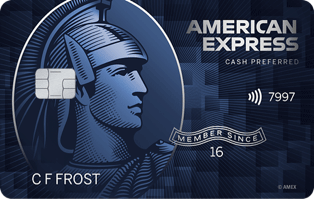
Blue Cash Preferred Card from American Express
Published by CreditMango · Mike Kwak · Editorial policy
Best for Groceries
+ Pros
- ✓6% on eligible supermarket spending within cap
- ✓First-year annual fee waived
- ✓Eligible streaming credit
− Cons
- ✗$95 recurring annual fee
- ✗Supermarket 6% cap: $6,000 per calendar year
- ✗2.7% foreign transaction fee
Rewards Breakdown
| Category | Rate | Monthly Spend | Annual Value |
|---|---|---|---|
| U.S. Supermarkets | 6% (up to $6K/yr) | $500/mo | $360 |
| Select Streaming | 6% | $50/mo | $36 |
| U.S. Gas Stations | 3% | $150/mo | $54 |
| Transit | 3% | $100/mo | $36 |
| All Other | 1% | $800/mo | $96 |
| Total Estimated Annual Rewards | $582 | ||
Perks & Credits
First $6,000 of eligible U.S. supermarket purchases per calendar year. Superstores, warehouse clubs and other excluded merchants do not qualify.
Enroll for up to $10 each month on eligible subscriptions through DisneyPlus.com, Hulu.com or Stream.ESPN.com U.S. sites. Subscriptions auto-renew; count only spending you would otherwise make.
Then $95 annually. The recurring-fee comparison excludes optional streaming-credit savings.
6% on select U.S. streaming subscriptions; 3% at eligible U.S. gas stations and on transit. Other eligible spending earns 1%.
Benefits are conditional and are not cash income. The full annual fee still applies.
- Problem with a purchase shown on your statement1,978
- Other features, terms, or problems946
- Advertising and marketing, including promotional offers546
Source: CFPB Consumer Complaint Database, checked 2026-10-11. These counts cover the issuer, not this specific card, and are not adjusted for customer count. Complaints are not necessarily evidence of wrongdoing.
Blue Cash Preferred rewards eligible supermarket spending, but 6% is capped at $6,000 per calendar year, then 1%. Its current offer waives the annual fee in year one; the recurring fee is $95. The advertised welcome offer is as high as $300 after $3,000 in six months. Your offer may be lower, or you may be ineligible.
Compare against a free alternative
At $500 monthly in eligible supermarkets, annual rewards are $360. After the recurring fee, that leaves $265, versus $120 from a no-fee 2% card: a $145 advantage before other spending or credits.
At $1,000 monthly, the capped calculation is $360 plus $60, or $420 before the fee. The old uncapped calculation would overstate that by $300.
For grocery spending alone, ignoring bonuses and credits, the first break-even against 2% is $2,375 annually: $95 divided by 4%. The advantage then shrinks above the cap and disappears at $20,500 annually. Higher spending is not always better.
Count benefits you will use
Enrollment can unlock up to $10 monthly toward eligible Disney streaming subscriptions. Our default comparison excludes that optional savings. Streaming rewards are excluded because that expense is not collected separately. Enter qualifying transit in the Gas & transit field. The supermarket calculation assumes a full calendar year with the cap unused.
Current introductory APR lasts 12 months for purchases and balance transfers, followed by a variable 19.49%–28.49% APR. Transfer requests must be within 60 days, and fees apply. Interest costs can outweigh rewards.
Verify eligibility, exclusions and your offer in Amex's current product and benefit terms.
Who This Card Is For
- →People with qualifying supermarket spending who compare the extra rewards against the recurring fee and alternatives.
- →Existing eligible streaming subscribers who can use the enrolled monthly credit without spending more.
Who Should Skip This Card
- →People whose main grocery merchants are excluded superstores or warehouse clubs.
- →People expecting unlimited 6% supermarket rewards.
- →People who carry interest-bearing balances or need a card without foreign transaction fees.
How It Compares
| Card | Annual Fee | Best Rate |
|---|---|---|
| Blue Cash Preferred Card from American Express (this card) | $95 | 6% |
| American Express Gold CardBest for Dining & Groceries | $325 | 4X |
| Citi Double Cash CardBest No-Fee Cashback Card | $0 | 2% |
| Chase Freedom UnlimitedBest No-Fee Card with Category Bonuses | $0 | 1.5% |
Frequently Asked Questions
Blue Cash Preferred Card from American Express
Best for Groceries
Apply NowSee our affiliate disclosure.
Explore More Cards
Last updated: 2026-09-10