Independent comparisons. No active credit card affiliate partnerships. How we make money · Data status
Best Cash Back Credit Cards of 2026
The highest flat-rate and category cash back cards, ranked by true value after fees.
Last reviewed: 2026-03-30. Card offers can change; check current issuer terms.
Our Top Picks at a Glance
Finding the right cash back credit card isn't just about chasing the highest headline rate — it's about matching a card's reward structure to how you actually spend money. A card offering 6% back at grocery stores is only the best pick if you're spending enough there to justify an annual fee. A flat-rate card with no fee might be the smartest move for someone who values simplicity over optimization. Getting this wrong means leaving real money on the table every year.
To build this list, we evaluated dozens of cards across five dimensions: reward rates on everyday spending categories, the true net value of annual fees after credits, sign-up bonus accessibility, intro APR offers for those carrying balances, and how cards perform for international travel. We also ran real-world math on what an average household — spending roughly $600/month on groceries, $400/month on dining, and $300/month on gas and transit — would actually earn over 12 months. Marketing copy is easy; the math tells the real story.
The five cards below represent the strongest options available in 2026 across a range of spending profiles. Whether you're a heavy grocery shopper, a frequent traveler, or someone who just wants simple, no-fuss rewards on every purchase, there's a pick here that will outperform whatever you're currently using.
American Express Gold Card — Best for Dining & Groceries
Annual Fee: $325 | Editor Score: 4.8/5
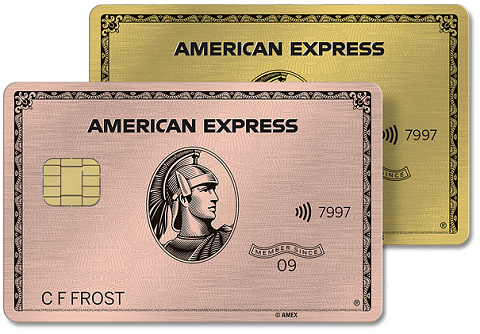
The Amex Gold Card is the best-performing card on this list for anyone who eats — which is to say, everyone. You earn 4X Membership Rewards points at restaurants worldwide and 4X at U.S. supermarkets (up to $25,000 in annual grocery spending), plus 3X on flights booked directly with airlines. The 100,000-point sign-up bonus after $6,000 in spending within six months is worth roughly $1,000 when redeemed through Amex's transfer partners — one of the highest-value bonuses available anywhere right now.
The $325 annual fee sounds steep until you tally the built-in credits: $120 in annual Uber Cash, $120 in dining credits at select restaurants, a $100 Resy credit, and $84 in Dunkin' credits — a combined $424 in value that more than covers the fee. For someone spending $1,000/month on groceries and dining combined, the 4X rate alone generates roughly $960 in points annually (valuing points at 2 cents each).
The biggest downside is acceptance. Amex isn't universally accepted, particularly outside the U.S. and at smaller domestic merchants, so you may need a Visa or Mastercard as a backup. There's also no airport lounge access at this price point — you'll need the Amex Platinum for that.
Who should get it: Heavy grocery shoppers and frequent diners who will use the built-in credits and can tolerate carrying a Visa backup for occasional gaps in acceptance.
Citi Double Cash Card — Best No-Fee Cashback Card
Annual Fee: $0 | Editor Score: 4.5/5
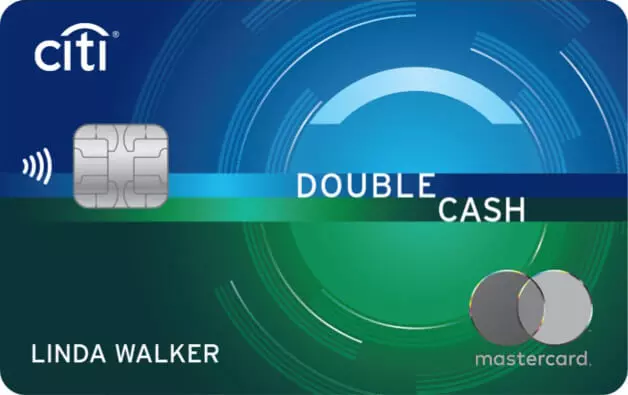
The Citi Double Cash earns 2% cash back on every purchase — 1% when you buy and 1% when you pay your bill — with no annual fee, no rotating categories, and no spending caps. For a $0 card, that's an unbeatable flat rate. You also get 5% back when booking through the Citi Travel portal, which adds a meaningful bonus for anyone who books hotels or flights online. The $200 sign-up bonus after $1,500 in spending within six months is easy to hit.
What makes this card quietly powerful is its flexibility: if you eventually pick up the Citi Strata Premier card, your Double Cash points become transferable to airline and hotel partners including Turkish Airlines Miles&Smiles and Wyndham — effectively turning a cash back card into a travel card without changing your wallet.
The 18-month 0% intro APR on balance transfers makes this card especially worth considering if you're carrying high-interest debt elsewhere. Moving that balance here and paying it down over a year and a half interest-free could save you hundreds.
The catch is the 3% foreign transaction fee, which makes this card a bad choice to swipe abroad. You'll also need to actually pay your bill to earn the second 1% — not a problem for responsible cardholders, but worth understanding how the earn structure works.
Who should get it: Anyone who wants maximum simplicity and the best flat-rate return at zero cost, particularly those carrying a balance they want to transfer or who pair it with the Citi Premier for travel redemptions.
Chase Freedom Unlimited — Best No-Fee Card with Category Bonuses
Annual Fee: $0 | Editor Score: 4.5/5
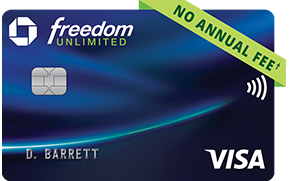
The Chase Freedom Unlimited is the rare no-fee card that delivers both a strong base rate and meaningful category bonuses. You earn 1.5% back on everything, 3% on dining and drugstore purchases, and 5% on travel booked through Chase. The $300 sign-up bonus — earned after just $500 in spending in the first three months — is one of the easiest to capture on the market.
The 15-month 0% intro APR on purchases and balance transfers gives you more than a year to pay down a large purchase or transferred balance without accruing interest. That's a genuinely useful feature for someone planning a big expense.
Where this card becomes exceptional is when paired with the Chase Sapphire Preferred or Reserve. As a standalone card, your points are redeemed as cash back. But connected to a Sapphire card, those same points become transferable to 14 airline and hotel partners — effectively tripling the potential value without paying a second annual fee.
The base 1.5% rate is lower than the Citi Double Cash's 2% flat rate, which means Double Cash wins in a head-to-head on pure cash back. But if you spend heavily on dining or plan to pair with a Sapphire card for travel, Freedom Unlimited pulls ahead.
Who should get it: Chase ecosystem users who want a no-fee everyday card that earns meaningful bonuses and can supercharge their existing Sapphire rewards.
Capital One Quicksilver Cash Rewards — Best No-Fee Card for Travel Spending
Annual Fee: $0 | Editor Score: 4.3/5
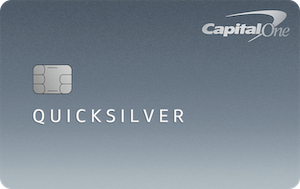
The Capital One Quicksilver earns a flat 1.5% cash back on every purchase with no annual fee — competitive but not market-leading on rewards alone. What separates it from the Citi Double Cash and Chase Freedom Unlimited is the absence of foreign transaction fees. For a $0 annual fee card, that's genuinely rare and valuable.
If you travel internationally even a few times a year, paying a 3% foreign transaction fee on a competing no-fee card quickly adds up. Spend $2,000 abroad and the Citi Double Cash effectively costs you $60 in fees — almost entirely wiping out the 2% cash back you earned. The Quicksilver avoids that entirely.
The $200 bonus after just $500 in spending within three months is the easiest bonus requirement on this list. For someone opening their first rewards card or looking for a straightforward win, hitting that threshold in the first month is realistic.
The main limitation is that 1.5% flat rate without a path to higher category bonuses or transfer partners. If you spend heavily on dining or groceries and don't travel much internationally, the Citi Double Cash or Chase Freedom Unlimited will likely outperform it. But as a travel-friendly daily driver with zero fees and no complexity, it punches above its weight.
Who should get it: Frequent international travelers who want a no-fee card with no foreign transaction fees, or anyone who wants a simple, reliable card with a low bonus threshold to hit.
Blue Cash Preferred Card from American Express — Best for Groceries
Annual Fee: $95 | Editor Score: 4.4/5
The Blue Cash Preferred earns the highest grocery cash back rate you'll find anywhere: 6% at U.S. supermarkets on up to $6,000 in annual spending (then 1%), plus 6% on select streaming services like Netflix, Disney+, and Hulu, and 3% at U.S. gas stations and transit. The $350 statement credit sign-up bonus after $3,000 in spending within six months more than covers the first year's annual fee on its own.
Run the grocery math: spending $500/month at U.S. supermarkets earns $360/year at 6% — nearly covering the $95 fee from groceries alone. Add streaming ($15/month Netflix = roughly $10.80 back/year), plus gas and transit at 3%, and most households using this card normally will come out significantly ahead of any no-fee card.
The $6,000 annual cap on the 6% grocery rate is the most important number to know. Spend more than $500/month on groceries — a real possibility for large families — and purchases above that cap drop to 1%, which changes the math quickly. The 2.7% foreign transaction fee also makes this a card to leave at home when traveling internationally.
The card comes with a $0 intro annual fee for the first year, giving you a full 12 months to decide whether the rewards justify the $95 going forward.
Who should get it: Households with consistent, predictable grocery and streaming spending who will stay under the $6,000/year cap — the 6% rate delivers real, meaningful cash back that justifies the annual fee.
How We Chose These Cards
Every card on this list was evaluated against the same framework. First, we calculated net annual value for three spending profiles: a single person, a couple, and a household with children — each with different grocery, dining, gas, and travel budgets. A card that looks great on paper has to actually deliver for real spending patterns.
We weighted annual fees against concrete value: fee-waiving intro offers, built-in credits, and realistic return rates. A $325 fee only earns its place if the card demonstrably puts more than $325 back in your pocket, either through credits or rewards. We applied that test to every premium card here.
We also considered sign-up bonus accessibility — not just the headline dollar amount, but how realistic the spending requirement is for a typical cardholder within the time limit. Finally, we factored in structural benefits like intro APR offers, foreign transaction fees, and ecosystem value (whether a card becomes more powerful when paired with another card). The result is a list built on math, not marketing.
Frequently Asked Questions
What's the difference between cash back cards and points cards?
Cash back cards return a percentage of your spending as a dollar-denominated credit or deposit — simple and universally useful. Points cards (like the Amex Gold or Chase Freedom Unlimited) earn points that can be redeemed for cash, travel, gift cards, or transferred to airline and hotel programs. Points often deliver higher value when transferred to travel partners — the Amex Gold's 100,000-point bonus is worth ~$1,000 as cash but can be worth $2,000 or more when transferred strategically to airline miles. If you don't travel much, cash back is simpler and never loses value.
Should I get a card with an annual fee?
Only if the math works. Add up the card's credits, then calculate realistic annual rewards based on your actual spending. If the total exceeds the annual fee, the card pays for itself. The Amex Gold's $325 fee is more than offset by $424 in built-in annual credits before you earn a single reward point. But if you won't use those credits — you don't take Ubers, don't eat at participating restaurants — the fee is a liability, not an asset. Always run your own numbers.
How do balance transfer offers work with these cards?
The Citi Double Cash offers 0% APR on balance transfers for 18 months, and the Chase Freedom Unlimited and Capital One Quicksilver offer 0% intro APR for 15 months on both purchases and balance transfers. To use one, you typically transfer your existing high-interest debt to the new card within a set window (usually 60–120 days of account opening) and pay a one-time transfer fee (usually 3–5%). As long as you pay off the transferred balance before the intro period ends, you pay zero interest — potentially saving hundreds depending on the balance size and your previous APR.
Can I use these cards internationally?
Two of the five cards on this list charge no foreign transaction fees: the Amex Gold Card and the Capital One Quicksilver. The Citi Double Cash, Chase Freedom Unlimited, and Blue Cash Preferred all charge between 2.7–3% on international purchases. On a $3,000 trip abroad, that's $90 in fees that reduce your effective rewards rate. If you travel internationally regularly, either use the Quicksilver (no fee, no annual fee) or the Amex Gold (no fee, premium rewards) for overseas purchases.
What credit score do I need for these cards?
The Amex Gold Card and the Blue Cash Preferred from Amex both recommend excellent credit — typically a FICO score of 720 or higher. The Citi Double Cash, Chase Freedom Unlimited, and Capital One Quicksilver are more accessible, generally approving applicants with good credit (670+). These are guidelines, not guarantees — approval also depends on income, existing debt, and credit history length. If your score is below 670, focus on building credit with a secured card before applying for any card on this list.
Full Comparison
| Card | Annual Fee | Rewards | Sign-up Bonus | APR |
|---|---|---|---|---|
American Express Gold CardAmerican Express | $325 | 4X restaurants (up to $50K/yr) & U.S. supermarkets (up to $25K/yr) | As high as 100,000 Membership Rewards points | 20.24% - 29.24% |
Citi Double Cash CardCiti | $0 | 2% on eligible purchases (1% buy + 1% pay); 5% on hotels | $200 cash back | 17.49% - 27.49% |
Chase Freedom UnlimitedChase | $0 | 5% travel via Chase | $200 bonus | 18.24% - 27.74% |
Capital One Quicksilver Cash RewardsCapital One | $0 | 1.5% on purchases; 5% on eligible Capital One Travel and Entertainment purchases | $200 cash bonus | 18.49% - 28.49% variable |
Blue Cash Preferred Card from American ExpressAmerican Express | $95 | 6% at U.S. supermarkets (up to $6K/yr) | As high as $300 | 19.49% - 28.49% variable |