Advertiser Disclosure: Some of the offers on this page are from companies that compensate CreditMango. This compensation may affect which products we write about and where they appear, but it does not affect our editorial evaluations. Our opinions are our own. Learn more
Editor's Picks

Best No Annual Fee Credit Cards of 2026

Top-performing credit cards that never charge an annual fee.

Last updated: 2026-03-30

Our Top Picks at a Glance

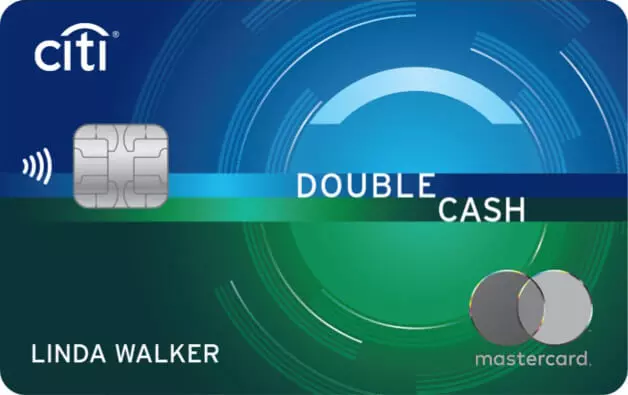
Citi Double Cash Card
Citi Double Cash CardBest No-Fee Cashback Card
2%$0/yr
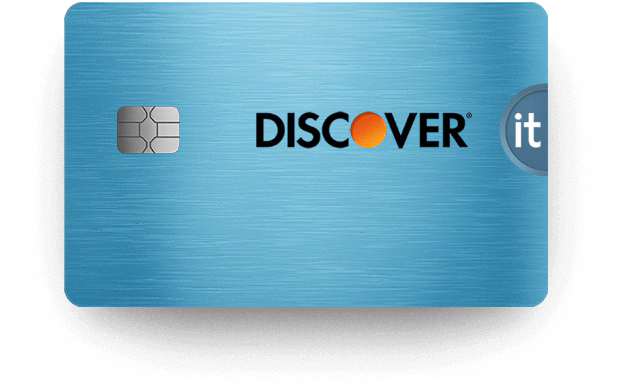
Discover it Secured Credit CardBest Card for Building Credit
2%$0/yr
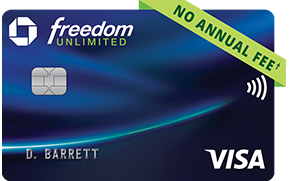
Chase Freedom UnlimitedBest No-Fee Card with Category Bonuses
1.5%$0/yr
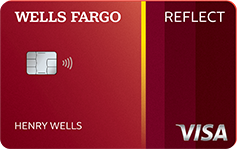
Wells Fargo Reflect CardBest Balance Transfer Card
0%$0/yr
Citi Simplicity CardBest Balance Transfer (No Late Fees)
0%$0/yr
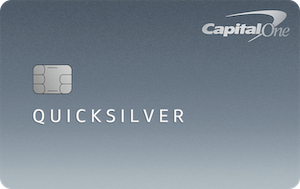
Capital One Quicksilver Cash RewardsBest No-Fee Card for Travel Spending
1.5%$0/yr

Finding a great credit card doesn't have to mean paying a yearly fee. The best no-annual-fee cards have quietly gotten better over the past few years — offering genuine rewards, meaningful sign-up bonuses, and perks that used to be reserved for cards charging $95 or more. The six cards on this list were chosen because they deliver real, measurable value without ever taking a dollar from your wallet just for holding them.

To build this list, we evaluated cards across five dimensions: rewards rate and structure, sign-up bonus value relative to the spending requirement, intro APR offers, ancillary perks, and the credit profile required to qualify. We ran the numbers on typical spending patterns — not best-case scenarios — and weighted each card's strengths against its actual weaknesses. A card that earns 2% on everything beats one that earns 5% in a single niche category for most people, but not for everyone. That's why this list isn't ranked purely by a single metric.

One thing worth saying upfront: no-annual-fee doesn't mean no trade-offs. Most of these cards have foreign transaction fees. Most won't get you airport lounge access. But if you want strong everyday value at zero ongoing cost, every card below earns its place.


Citi Double Cash Card — Best No-Fee Cash Back Card

The Citi Double Cash has held onto its title as the best flat-rate cash back card at $0 annual fee for years, and in 2026 it still hasn't been meaningfully beaten. You earn 2% on every purchase — 1% when you buy and 1% when you pay your bill — which is the highest guaranteed flat rate you'll find without paying an annual fee. On $20,000 in annual spending, that's $400 cash back, year after year, with no categories to track.

The $200 sign-up bonus after $1,500 in spending within six months is easy to hit, and the 0% intro APR for 18 months on balance transfers gives it legitimate utility as a debt-payoff tool if you're carrying a balance elsewhere. If you eventually upgrade to a Citi Premier card, your Double Cash rewards convert to ThankYou Points that can be transferred to airline partners — effectively unlocking premium travel redemptions at no extra cost on the earning side.

The downsides are real but manageable. You'll pay a 3% foreign transaction fee, so this isn't your card for international trips. And technically, you only earn that second 1% when you pay — meaning carrying a balance costs you more than just interest.

Best for: Anyone who wants the simplest, highest-return cash back card with no annual fee and no categories to think about.


Chase Freedom Unlimited — Best No-Fee Card with Category Bonuses

The Chase Freedom Unlimited is the card for people who want more than a flat rate without paying a dime in annual fees. You get 1.5% on all purchases, 3% at restaurants and drugstores, and 5% on travel booked through Chase — all with a $0 annual fee. The current sign-up bonus is $300 (as 30,000 Ultimate Rewards points) after just $500 in spending in the first three months, which is an exceptional return on a low spending threshold.

What makes this card genuinely interesting is its place in the Chase ecosystem. On its own, your points are worth 1 cent each as cash back. Pair it with a Chase Sapphire Preferred or Reserve, and those same points can transfer to United, Hyatt, Southwest, and a dozen other partners — potentially doubling or tripling their value on the right redemption. That's a lot of upside for a $0-fee card.

The 15-month 0% intro APR on both purchases and balance transfers is a solid benefit, and the card carries no penalty APR if you miss a payment. The main critique: the 1.5% base rate trails the Citi Double Cash's 2% for non-category spending, and the 3% foreign transaction fee limits its usefulness abroad.

Best for: Diners, frequent Chase customers, and anyone who might eventually add a Sapphire card and wants to start accumulating transferable points now.


Discover it Secured Credit Card — Best Card for Building Credit

Most secured cards are a bad deal. They charge annual fees, pay no rewards, and do just enough to report to the credit bureaus. The Discover it Secured is different in almost every way. There's no annual fee, you earn 2% cash back at gas stations and restaurants (on up to $1,000 in combined purchases per quarter) and 1% on everything else — and Discover matches every dollar of cash back you earn in your first year through their Cashback Match program.

That last point deserves emphasis. If you earn $100 in cash back during year one, Discover gives you another $100 at the end of the year. That's a 100% return on your rewards, which no unsecured card can match. For someone building credit from scratch or recovering from past problems, this card does something rare: it treats you like a real cardholder, not a liability.

The required security deposit ($200 minimum, up to $2,500) is the main hurdle — you'll need that cash upfront as collateral. The 28.24% APR is high, which is why paying in full every month is essential. Discover is also less widely accepted than Visa or Mastercard, though acceptance has improved significantly. Discover will automatically review your account for an upgrade to an unsecured card after seven months of responsible use.

Best for: Anyone starting out with no credit history or rebuilding after financial difficulties who wants to earn real rewards in the process.


Wells Fargo Reflect Card — Best Balance Transfer Card

If you're carrying high-interest credit card debt, the math is simple: every month you pay interest is a month the balance transfer card is working against you. The Wells Fargo Reflect gives you up to 24 months of 0% intro APR — the longest intro period of any card on this list — on both purchases and balance transfers. The standard offer is 21 months, extended to 24 if you make your minimum payments on time.

On a $10,000 balance transferred at 0%, that's two years to pay it down without interest eating into your progress. At a typical credit card APR of 22%, that's potentially $2,000+ in interest avoided. The card also includes cell phone protection — up to $600 per claim with a $25 deductible when you pay your phone bill with the card — which is a genuinely useful perk for a $0-fee product.

The honest caveat: this card has no rewards program at all. Once the intro period ends, the regular APR of 24.49%–34.49% kicks in and is among the higher ranges on this list, so it's not a card you want to carry a balance on long-term. There's also a 3% foreign transaction fee. Think of the Reflect as a financial tool for a specific purpose — debt payoff — rather than a long-term everyday card.

Best for: Anyone with existing high-interest credit card debt who wants the maximum amount of time to pay it off interest-free.


Citi Simplicity Card — Best Balance Transfer Card (No Late Fees)

The Citi Simplicity takes a slightly different angle on the balance transfer category. It offers 21 months of 0% APR on balance transfers and 12 months on purchases — but its real differentiator is that it never charges a late fee, never charges a penalty APR, and never raises your rate for missing a payment. For someone who's managing a tight budget and worried about the occasional missed due date, that's meaningful protection.

Most balance transfer cards will hit you with a penalty APR of 29.99% or higher if you miss a payment, potentially eliminating the entire benefit of the 0% offer. The Simplicity's guarantee that this won't happen makes it more forgiving than the competition. The regular APR range of 18.49%–29.24% is also somewhat lower than many competing no-fee cards.

Like the Reflect, there are no rewards here — you're using this card as a debt-management instrument, not an everyday earner. The 3% foreign transaction fee applies, and the balance transfer fee of 3–5% of the transferred amount means you should run the math on whether the savings outweigh the upfront cost (they almost always do for large balances). Once your balance is paid off, this card has limited reason to stay in your wallet.

Best for: Balance transfer users who want strong protections against late fees and penalty rates during the repayment period.


Capital One Quicksilver Cash Rewards — Best No-Fee Card for Travel Spending

The Capital One Quicksilver earns 1.5% cash back on every purchase — matching the Chase Freedom Unlimited's base rate — but it has one feature that sets it apart from most no-annual-fee cards: no foreign transaction fees. For a card that costs nothing to own, that's a legitimately useful perk for anyone who travels internationally or shops at foreign websites.

The sign-up bonus is also the easiest to earn on this list: $200 cash back after just $500 in spending within the first three months. That's a 40% return on your first $500, which makes the Quicksilver worth opening even if you only keep it for a few months. The 15-month 0% intro APR on both purchases and balance transfers gives you a reasonable window for a large purchase or debt payoff.

The main limitation is the 1.5% flat rate, which trails the Citi Double Cash's 2% for domestic everyday spending. If most of your purchases happen in the U.S., the Double Cash will likely outperform it over time. But if you travel a few times a year or regularly buy from international merchants, the absence of a foreign transaction fee closes that gap quickly. No categories, no rotating activations, no thinking required.

Best for: Occasional international travelers who want a simple flat-rate card with no foreign transaction fees and no annual fee.


How We Chose These Cards

Every card on this list was evaluated against the same criteria: rewards value on real spending, sign-up bonus relative to the required spend, intro APR terms, secondary perks, credit accessibility, and long-term keep-worthiness. We excluded cards with annual fees, cards with deceptive terms, and cards where the headline benefit requires a subscription, partnership enrollment, or a secondary card to unlock.

We also tried to cover the full spectrum of needs. Not everyone is optimizing for maximum cash back — some readers need to build credit from zero, some need to pay down existing debt, some travel internationally. A card that's mediocre for one person can be the perfect tool for another. Our editor scores reflect each card's performance relative to its category, not a single universal ranking. The Citi Double Cash and Chase Freedom Unlimited tied at 4.5 because they genuinely serve different needs at the same level of quality. All rates and terms were verified as of early 2026 and are subject to change.


Frequently Asked Questions

Are no-annual-fee credit cards worth it, or should I just get a premium card?

For most people, a no-annual-fee card is worth it either as a primary card or a complement to a premium one. The Citi Double Cash at 2% cash back will outperform a premium travel card for someone who doesn't travel frequently enough to use the card's perks. The math changes once you're spending enough — and using enough benefits — to justify a $95 or $550 annual fee. A good rule of thumb: if you can't clearly identify at least $1 in benefits per dollar of annual fee, the fee isn't worth it.

What credit score do I need for these cards?

Most cards on this list require "good" credit, which generally means a FICO score of 670 or above. The exception is the Discover it Secured, which requires no minimum credit score and accepts applicants with no credit history at all. If your score is between 580 and 669 ("fair" credit), your options are more limited — the Discover it Secured is likely your best starting point, as it reports to all three credit bureaus and has a clear path to an unsecured upgrade.

Can I have more than one no-annual-fee card?

Yes, and many people benefit from combining two. A common pairing is the Citi Double Cash (2% on everything) alongside the Chase Freedom Unlimited (3% dining, 3% drugstores, 5% travel) — you use each card where it earns the most. The only consideration is that applying for multiple cards in a short period creates hard inquiries on your credit report, which can temporarily lower your score by a few points. Spacing applications a few months apart is generally advisable.

Are balance transfer fees worth paying on a 0% APR card?

Usually yes, if you're carrying a high-interest balance. A 3% balance transfer fee on $5,000 costs $150 upfront. If that balance was accruing interest at 22% APR, you'd pay roughly $1,100 in interest over the same 12 months — making the $150 fee extremely worthwhile. The Wells Fargo Reflect and Citi Simplicity both charge 3–5% balance transfer fees, so calculate your breakeven point based on your current interest rate and how long you need to pay the balance down.

Do no-annual-fee cards hurt your credit score?

No — and keeping them open long-term often helps your score. Credit utilization (how much of your available credit you're using) and length of credit history are two of the biggest scoring factors. A no-annual-fee card you've had for years and rarely use is quietly improving both: it adds to your available credit limit (lowering utilization) and lengthens your average account age. Unless a card has a dormancy fee — none of these do — there's almost never a reason to close a no-annual-fee card you've had for a long time.

Full Comparison

CardAnnual FeeRewardsSign-up BonusAPRScore
Citi Double Cash CardCiti
$02% on everything (1% buy + 1% pay)$200 cash back17.74% - 27.74%4.5/5
Discover it Secured Credit CardDiscover
$02% gas & restaurants (up to $1Cashback Match — Discover matches ALL cash back earned in year 128.24%4.4/5
Chase Freedom UnlimitedChase
$05% travel via Chase$300 bonus20.49% - 29.24%4.5/5
Wells Fargo Reflect CardWells Fargo
$0NoneNone24.49% - 34.49%4.3/5
Citi Simplicity CardCiti
$0NoneNone18.49% - 29.24%4.2/5
Capital One Quicksilver Cash RewardsCapital One
$01.5% cash back on every purchase$200 cash bonus19.99% - 29.99%4.3/5