Independent comparisons. No active credit card affiliate partnerships. Numbers checked 2026-09-10. How we make money · Data status
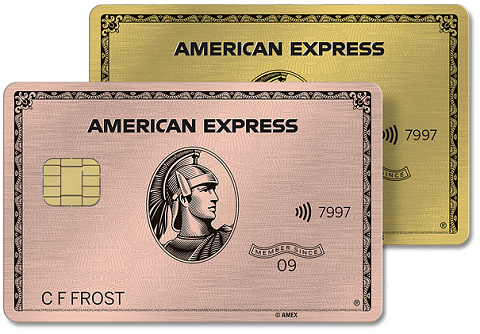
American Express Gold Card
Published by CreditMango · Mike Kwak · Editorial policy
Best for Dining & Groceries
A food-spending specialist when the credits fit purchases you already make. Compare the $325 fee with actual benefit use and your redemption method; points are not the same as cash back.
Don't get the American Express Gold Card if…
We'd rather lose you here than have you hold the wrong card.
- ✗You won’t track monthly-expiring credits — miss them and your real fee is $325, not the brochure math.
- ✗You want one simple card for everything — 1X outside the food categories is a bad everyday rate.
- ✗You carry a balance some months — no rewards card survives 25%+ APR math.
Estimated benefits compared with the annual fee
Fee minus estimated benefits: $115
- Annual fee
- $325
- Credits, honestly
- $210
What counts: Uber Cash $80 (face $120) · Monthly dining credit $60 (face $120) · Resy credit $50 (face $100) · Dunkin’ credit $20 (face $84). Face value totals $424; our estimated usable value is $210. The issuer still charges the full $325 annual fee. Benefits are conditional and are not cash income.
Estimated value after the annual fee
Computed at our 1.5¢-per-point valuation (updated 2026-09 — how we value points), with credits counted at our estimated usable value, not face value or guaranteed cash savings. Everyday spending is on top of this; the planner models yours.
| First year | Every year after | Two years | |
|---|---|---|---|
| Welcome bonus (100,000 pts × 1.5¢) | $1,500 | — | $1,500 |
| Credits, honestly valued | $210 | $210 | $420 |
| Annual fee | −$325 | −$325 | −$650 |
| Net, before everyday earning | $1,385 | −$115 | $1,270 |
Welcome bonus: counted once · Benefits: counted when available; anniversary miles start in year two · Fee: first year and ongoing
The annual fee exceeds estimated ongoing benefits by $115/year. Versus a no-fee 2% cash-back card, its modeled earning advantage covers that difference at around $9,100/year of card spending.
+ Pros
- ✓Strong dining and supermarket earning
- ✓Credits can offset costs you already incur
- ✓Transferable Membership Rewards points
− Cons
- ✗$325 annual fee; credits require active use
- ✗No lounge access
- ✗Bonus offer and eligibility vary
Rewards Breakdown
| Category | Rate | Monthly Spend | Annual Value |
|---|---|---|---|
| Restaurants | 4X (up to $50K/yr) | $500/mo | $360 |
| U.S. Supermarkets | 4X (up to $25K/yr) | $800/mo | $576 |
| Flights (direct) | 3X | $100/mo | $54 |
| All Other | 1X | $600/mo | $108 |
| Total Estimated Annual Rewards | $1098 | ||
Perks & Credits
Add Gold to Uber for $10 monthly Uber Cash on U.S. rides and orders; select an Amex card for payment. Unused monthly amounts expire.
Enroll for up to $10/month at Grubhub (including Seamless), Buffalo Wild Wings, Five Guys, The Cheesecake Factory and Wonder. Check current eligible merchants.
Enroll for up to $50 January–June and $50 July–December on eligible purchases at qualifying U.S. restaurants indicated as eligible on Resy. A Resy reservation is not required.
Enroll for up to $7/month on eligible purchases at U.S. Dunkin’ locations. Unused monthly amounts do not roll over.
Check the ratio, fees and transfer timing for the specific partner in your Membership Rewards account. Do not assume every hotel or airline transfers 1:1.
Use worldwide without extra charges.
The credits, honestly
Face value is the brochure number. Our value is what we'd actually pay for each perk if it were sold as a standalone subscription — the only fair way to weigh a coupon you might not use. Untick any credit you wouldn't use and the fee math updates.
| Counts | Credit | Face | Our value | Why |
|---|---|---|---|---|
| $120 | $80 recurring | Add Gold to Uber; U.S. orders/rides, paid with an Amex card. $10 monthly; unused amounts expire. | ||
| $120 | $60 recurring | Enrollment required. $10/month at participating merchants; this is not a general restaurant credit. | ||
| $100 | $50 recurring | Enrollment required. $50 per half-year at eligible U.S. Resy restaurants; no Resy reservation required. | ||
| $84 | $20 recurring | Enrollment required. Up to $7/month at eligible U.S. Dunkin’ locations; unused amounts expire. | ||
| Credits that count | — | $210 |
The $325 annual fee exceeds your selected estimated benefits by $115/year. The full annual fee still applies. Estimate with your own spending →
Where the points can go
Amex Membership Rewards transfers to these programs (ratios as of 2026-09). One warning before the table: transfers are a one-way door — once points leave, they can't come back.
| Program | Ratio | Best use |
|---|---|---|
| ANA Mileage Club | 1:1 | ANA-operated or partner awards, subject to current award pricing, taxes, surcharges and availability |
| Air France/KLM Flying Blue | 1:1 | Promo awards to Europe, both cabins |
| Avianca LifeMiles | 1:1 | Star Alliance awards without fuel surcharges |
| Virgin Atlantic Flying Club | 1:1 | Upper Class to London; partner bookings on Delta |
A trip this card can actually buy
Explore a Japan award using Membership Rewards
Check current airline award pricing Compare the full cash fare and award taxes
Illustrative destination, not confirmed seats or a fixed award price. Check the airline before transferring.
Plan this trip with the American Express Gold Card →Pairs well with
Same Membership Rewards pool; 4X lands on your biggest business categories
- Problem with a purchase shown on your statement1,974
- Other features, terms, or problems945
- Advertising and marketing, including promotional offers546
Source: CFPB Consumer Complaint Database, checked 2026-10-12. These counts cover the issuer, not this specific card, and are not adjusted for customer count. Complaints are not necessarily evidence of wrongdoing.
The Amex Gold is a dining and supermarket rewards card with a $325 annual fee. Its value depends on where you shop, how you redeem Membership Rewards, and which benefits replace expenses you already have. Start with those questions before treating the welcome offer as a reason to apply.
Count Credits You Will Actually Use
The advertised annual total is up to $424, split across benefits with separate enrollment and use requirements. Our default estimate counts $210: $80 for Uber Cash, $60 for the dining credit, $50 for Resy and $20 for Dunkin’. These are CreditMango assumptions, not issuer promises. That leaves $115 of the annual fee before rewards, displayed as approximately $120 under our rounding convention.
Using three credits does not necessarily cover the fee. Even fully using the $120 dining, $100 Resy and $84 Dunkin’ benefits totals $304, leaving $21. Missing monthly opportunities reduces the total further. Change the calculator selections to reflect your own habits.
The dining-credit merchant list has changed. Check the current list in the perks section and enroll before using applicable benefits. Resy eligibility depends on the restaurant and transaction, not simply having a reservation. Do not spend more or order delivery solely to claim a credit.
Understand the Earning Limits
Restaurant purchases earn 4X on the first $50,000 per calendar year; eligible U.S. supermarket purchases earn 4X on the first $25,000. Each drops to 1X beyond its cap. Superstores and warehouse clubs are not the same as eligible supermarkets.
Flights booked directly with airlines or through Amex Travel earn 3X. Eligible prepaid hotels through Amex Travel earn 5X. Check the booking channel before assuming a travel purchase receives a bonus rate.
For an illustrative $500 monthly restaurant spend and $800 monthly eligible supermarket spend, annual earnings are 24,000 and 38,400 points respectively, below both caps. At our 1.5-cent transfer estimate, those are worth $360 and $576 before fees. Those estimates are not cash rebates and exclude the value you could earn with another card.
The calculator and comparison use one full earning year with unused dining and supermarket caps, then reduce rewards to 1X above each cap. The planner tracks allocated spending and resets those caps in January. For existing cards it assumes no earlier cap usage before the plan starts; check your remaining allowance. All three tools use 1X for broad travel because they do not separate qualifying flights from hotels and rideshare. Grocery estimates assume eligible U.S. supermarket purchases.
Points Are Not Cash Back
Standard eligible statement credits redeem at 0.6 cents per point. That makes 100,000 points worth $600 toward eligible charges, at the standard redemption rate. Our transfer estimate values that same balance at $1,500, but the outcome depends on the award you actually find.
Transfer ratios differ by partner. Compare the award price, taxes, surcharges, transfer timing and cash alternative before moving points. Airline award prices and available seats change; check the airline’s current results before transferring.
Check Your Own Welcome Offer
Amex advertises an offer as high as 100,000 points after $8,000 of purchases in six months. The offer varies and you may not be eligible. Our maximum-offer examples are scenarios; confirm your personal offer before accepting the card and use only purchases you can afford and would make anyway.
How It Fits Your Wallet
Compare Gold with the cards you already hold. A strong food-spending rate may be useful, but general purchases need their own comparison. Gold does not include airport lounge access. If that is your priority, compare the current cost and terms of cards with lounge benefits rather than adding another annual fee automatically.
Sources and Assumptions
Checked September 10, 2026: Amex Gold benefits, Amex welcome offers, Membership Rewards redemption values, and Resy credit eligibility. Our editorial estimates are explained on the valuations page.
Who This Card Is For
- →People with eligible dining and U.S. supermarket spending who can justify the fee using realistic redemption values.
- →Travelers who would already use the participating credit merchants without increasing spending.
- →People willing to check award availability and transfer terms before moving Membership Rewards points.
Who Should Skip This Card
- →People whose grocery spending is mainly at superstores or warehouse clubs rather than eligible U.S. supermarkets.
- →People who prefer uncomplicated cash back or would change spending habits just to use credits.
- →Travelers who need airport lounge access from this card.
How It Compares
| Card | Annual Fee | Best Rate |
|---|---|---|
| American Express Gold Card (this card) | $325 | 4X |
| Chase Sapphire PreferredBest Starter Travel Card | $95 | 5X |
| Capital One Venture XBest Premium Travel Card (Simplicity) | $395 | 2X |
| Blue Cash Preferred Card from American ExpressBest for Groceries | $95 | 6% |
Offer history
What this card's bonus has looked like over time — useful before you decide whether to wait.
| When | Bonus | Spend requirement |
|---|---|---|
| 2026-05 | as high as 100,000 pts (varies by applicant) | $8,000 / 6 mo |
| 2026-03 | 100,000 pts (“as high as” — offers vary by applicant) | $6,000 / 6 mo |
The fine print
The numbers card marketing keeps in the footnotes.
| Regular APR | 20.24% - 29.24% |
| Penalty APR | 29.99% |
| Balance transfer fee | Not offered |
| Cash advance fee | $10 or 5% |
| Foreign transaction fee | None |
Frequently Asked Questions
Explore More Cards
Last updated: 2026-09-10