Independent comparisons. No active credit card affiliate partnerships. How we make money · Data status
Best Credit Cards for Fair Credit (580-669) in 2026
Cards you can actually get approved for with a fair credit score, ranked by value.
Last reviewed: 2026-03-30. Card offers can change; check current issuer terms.
Our Top Picks at a Glance
Having fair credit — a score somewhere between 580 and 669 — puts you in a frustrating middle ground. You've got enough history to know credit exists, but not quite enough to unlock the premium cards with the best rewards and lowest rates. The good news: the right card at this stage doesn't just help you borrow money. It actively rebuilds your profile, earns real rewards in the process, and positions you for a significant score jump within 12 to 18 months if you use it responsibly.
To find the best options for 2026, we evaluated dozens of cards available to people in the fair credit range on five criteria: approval odds for scores between 580 and 669, real-world reward value (not just headline rates), fees relative to what you actually get, the card's ability to help you graduate to better products, and the quality of tools offered for credit monitoring and management. We also looked at each issuer's track record for automatic credit limit increases and product upgrades — because the goal isn't just to get a card, it's to get a card that helps you need it less.
Two cards earned spots on this list. They're not identical — one is a secured card designed for people rebuilding from scratch, and one is an unsecured card for those closer to the 660–669 end of the range. Together they cover most situations someone with fair credit will find themselves in. Here's what we found.
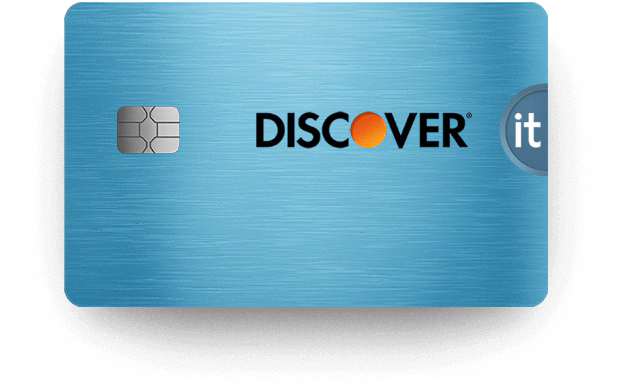
Discover it Secured Credit Card — Best Card for Building Credit
Editor Score: 4.4/5 | Annual Fee: $0 | APR: 28.24% | Rewards: 2% at gas stations and restaurants (up to $1,000 combined per quarter), 1% on everything else
Most secured cards ask you to lock up a deposit, charge you an annual fee for the privilege, and offer you nothing in return except the hope that your score goes up. The Discover it Secured is a different animal entirely. It's a secured card that functions like a real rewards card — and in year one, it functions like an exceptional one.
Here's why it earned the top spot: Discover's Cashback Match program doubles every dollar of cash back you earn during your entire first year. You won't see the match posted until after your first 12 months, but the math is real. If you put $500 per month on the card and earn somewhere around $80–$100 in cash back from gas and restaurant spending, Discover matches that to $160–$200. That's a meaningful return on a card with no annual fee, and it comes without requiring a single dollar of good-credit history to qualify — Discover states explicitly that no credit score is required to apply.
The card reports to all three major bureaus (Equifax, Experian, TransUnion), which matters because building your score requires a complete and consistent payment record across all three. You also get your FICO score for free each month on your statement, so you can track progress rather than guessing.
The deposit requirement is the main friction point. You'll need a minimum of $200 to open the account, and your credit limit equals whatever you deposit (up to $2,500). That $200 is yours — it's not a fee — but it is money that sits idle while the account is open. Discover reviews your account automatically after seven months to evaluate whether you qualify to transition to an unsecured card and get your deposit back. Many cardholders report making that transition within 12–14 months.
Who should get this card: Anyone with a score below 640, a thin credit file, or a recent derogatory mark who wants to earn actual rewards while rebuilding. If you spend regularly on gas and food, the category bonuses plus the first-year match make this the highest-earning secured card available right now.
Biggest downside: The 28.24% APR is punishing if you carry a balance. Treat this card as a charge card — pay the full statement balance every month — and the rate becomes irrelevant. Carry a balance and the interest will erase every dollar of rewards you earned and then some.
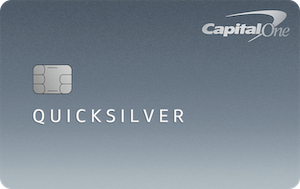
Capital One Quicksilver Cash Rewards — Best No-Fee Card for Travel Spending
Editor Score: 4.3/5 | Annual Fee: $0 | APR: 19.99%–29.99% | Rewards: 1.5% cash back on every purchase
The Capital One Quicksilver is a genuine rewards card with no annual fee, a real sign-up bonus, and a 15-month interest-free window on both purchases and balance transfers. It's approved for applicants with "average" credit — Capital One's term for roughly the 660–699 range — which puts it within reach if you're on the higher end of fair credit and have a year or two of clean payment history behind you.
The sign-up bonus is worth calling out specifically: $200 cash back after $500 in spending within the first three months. That's one of the easiest bonus thresholds in the industry. You don't need to hit $3,000 or $4,000 in spend — $500 works out to roughly $167 per month, which most people hit on groceries alone. Combined with 1.5% back on every purchase going forward, you're looking at roughly $270–$300 in total first-year value for average monthly spending of $500–$600.
The flat 1.5% on everything makes this card genuinely simple to use. No rotating categories to activate, no spending caps to track, no mental math required at checkout. That simplicity has real value when you're also trying to manage a budget and build a credit habit — one less thing to think about.
The 0% intro APR for 15 months on purchases and balance transfers is a legitimate perk for someone at the fair-credit level. If you have a small balance on a higher-rate card and want to consolidate it while you're rebuilding, this window gives you over a year to pay it down without interest accruing. Just note that the standard APR after the intro period runs as high as 29.99% — so have a payoff plan before you transfer.
No foreign transaction fees at zero annual cost is also notable if you travel internationally at all. Most no-fee cards in this credit tier either skip international travel perks entirely or charge 3% on foreign purchases. The Quicksilver skips the fee, which makes it a reasonable everyday card to bring abroad.
Who should get this card: Someone in the 660–669 score range who wants an unsecured card with a real bonus and clean everyday rewards. If you're tired of secured cards and ready to graduate, this is the most accessible quality option available at $0 annual fee.
Biggest downside: The 1.5% flat rate is slightly below what you'd earn with something like the Citi Double Cash (2% total), and there are no transfer partners or elevated category bonuses for those who want to maximize rewards. This is a transitional card — the right move now, not forever.
How We Chose These Cards
We assessed every major credit card available to applicants in the 580–669 FICO range and scored each on five factors: approval accessibility (how reliably cardholders in this range are approved), annual fee load (whether fees consume the rewards earned), reward rate relative to the credit tier, credit-building infrastructure (bureau reporting, limit increase policies, graduation paths), and issuer transparency.
We excluded cards with high annual fees that weren't offset by meaningful perks, cards with predatory fee structures common in the subprime market, and cards with rewards programs so complex that the average cardholder in this range would be unlikely to benefit fully. We also weighted graduation potential heavily — a card that traps you in the fair-credit tier indefinitely isn't actually a good card for fair credit. Every card on this list has a documented path to better terms, higher limits, or unsecured status within 12–18 months of responsible use.
Frequently Asked Questions
Can I get approved for a credit card with a 580 credit score?
Yes, though your options are more limited than at higher score tiers. The Discover it Secured is specifically designed for this range — Discover states it requires no prior credit score, making it accessible even below 580. The Capital One Quicksilver is better suited for scores in the 660–669 range. In general, secured cards are your most reliable path to approval if you're below 640, because the deposit reduces the issuer's risk and lowers the approval bar.
How much can I realistically earn in rewards with fair credit?
More than you might expect. With the Discover it Secured and roughly $400–$500 in monthly spending split across gas, restaurants, and everyday purchases, you could earn $80–$100 in cash back in year one — then double it through the Cashback Match to $160–$200. With the Capital One Quicksilver, $500 per month in spending earns roughly $90 in ongoing rewards annually, plus the $200 sign-up bonus in year one for a first-year total around $290. Neither of these is life-changing money, but it's real value from a card that's also improving your credit profile.
Will applying for a new credit card hurt my credit score?
A new application will trigger a hard inquiry, which typically reduces your score by five to ten points temporarily. That dip usually recovers within three to six months of on-time payments. More importantly, a new account increases your available credit, which lowers your utilization ratio — and if your current utilization is high, that improvement can more than offset the inquiry hit within a few billing cycles. The key is not to apply for multiple cards at once, which stacks multiple hard pulls and looks risky to lenders.
How long will it take to move from fair credit to good credit?
With consistent on-time payments and low utilization (under 30%, ideally under 10%), most people move from the low-600s to the 670–700 range within 12 to 18 months. The two biggest levers are payment history (the single largest factor in your score) and utilization. Keep your balance below 30% of your limit each month, pay on time every month without exception, and don't close your oldest accounts. Discover's monthly FICO score tracking makes it easy to monitor your trajectory and catch any issues early.
Should I get a secured card or an unsecured card if I have fair credit?
It depends on where you fall in the 580–669 range. If you're below 640 or have recent late payments or collections on your report, start with the Discover it Secured — the approval odds are better and the rewards are genuinely strong for a secured product. If you're in the 650–669 range with a clean recent history, you may qualify for the Capital One Quicksilver and can skip the deposit entirely. When in doubt, use Capital One's pre-qualification tool or Discover's pre-approval check, both of which use a soft pull that won't affect your score.
Full Comparison
| Card | Annual Fee | Rewards | Sign-up Bonus | APR |
|---|---|---|---|---|
Discover it Secured Cash Back Credit CardDiscover | $0 | 5% in activated quarterly categories up to the quarterly maximum; 1% otherwise | Cashback Match on eligible first-year cash back; paid | See current issuer pricing terms |
Capital One Quicksilver Cash RewardsCapital One | $0 | 1.5% on purchases; 5% on eligible Capital One Travel and Entertainment purchases | $200 cash bonus | 18.49% - 28.49% variable |