Independent comparisons. No active credit card affiliate partnerships. How we make money · Data status
Best Business Credit Cards for Solopreneurs & Freelancers (2026)
The best business credit cards for gig workers, freelancers, and solopreneurs — ranked by real value for small business spending.
Last reviewed: 2026-03-31. Card offers can change; check current issuer terms.
Our Top Picks at a Glance

Most "best business credit cards" lists are written for established companies with dedicated finance teams and six-figure monthly spend. That's not who we're writing for. This list is for the gig worker filing 1099s, the freelance designer who just formed an LLC, and the solopreneur who needs to separate personal and business expenses without paying a fortune in fees.
Business credit cards serve a dual purpose for small operators: they earn rewards on spending you're already doing (office supplies, internet, advertising, shipping), and they build a business credit profile separate from your personal score. That second benefit is often worth more than the rewards themselves — a strong PAYDEX score opens doors to SBA loans, vendor credit lines, and business financing that doesn't require a personal guarantee.
We evaluated these cards on five criteria that matter to solopreneurs: annual fee relative to typical small business spend ($2,000-$50,000/year), rewards on the categories freelancers actually use, whether the card reports to personal credit bureaus (some people want separation, others want the boost), intro APR for managing cash flow, and the quality of the signup bonus relative to the spending requirement.
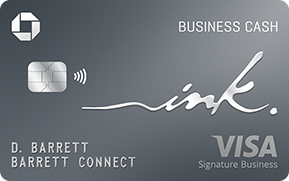
Chase Ink Business Cash — Best Overall ($0 Fee)
Annual Fee: $0 | Editor Score: 4.7/5
The Ink Business Cash is the card we recommend to every solopreneur starting out. The 5% back on office supplies and internet/cable/phone services (up to $25,000/year combined) hits the exact categories where freelancers spend — your Staples runs, your monthly Comcast bill, your Adobe subscription. You also get 2% at gas stations and restaurants (up to $25,000/year combined), which covers the DoorDash driver filling up their tank or the freelancer taking a client to lunch.
The $750 signup bonus after $6,000 in 3 months is achievable for most small businesses, and the card has no annual fee ever. The one downside: Chase business cards do report to your personal credit, which means this card's utilization affects your personal score. For most solopreneurs just starting out, that's actually a positive — it adds a high-limit account to your personal credit mix.
Best for: Freelancers and gig workers with regular office supply, internet, and phone expenses under $25K/year.
Pros:
- 5% on office supplies and internet/phone
- $0 annual fee
- $750 signup bonus
- 2% on gas and restaurants
Cons:
- Reports to personal credit (not always desired)
- 5% categories cap at $25K/yr
- No travel benefits
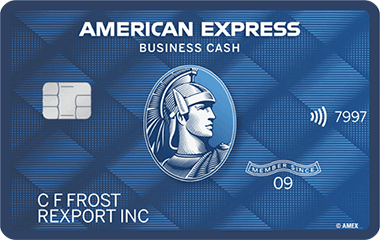
American Express Blue Business Cash — Best for Simplicity
Annual Fee: $0 | Editor Score: 4.5/5
If you don't want to think about categories at all, the Blue Business Cash gives you a flat 2% back on everything up to $50,000 in annual purchases — then 1% after that. For a solopreneur spending $30K-$40K per year, that's $600-$800 back with zero fee and zero mental overhead.
The key advantage over the Ink Business Cash: Amex business cards generally do not report to personal credit bureaus. If you're rebuilding personal credit and want to keep business utilization completely separate, this is the card. The 0% intro APR for 12 months also helps freelancers manage cash flow during slow seasons.
Best for: Gig workers who want dead-simple rewards and complete separation from personal credit.
Pros:
- $0 fee with 2% flat rate
- 0% intro APR for 12 months
- Does NOT report to personal credit
- Expanded buying power above credit limit
Cons:
- 2% drops to 1% after $50K/yr
- 2.7% foreign transaction fee
- Amex acceptance gaps
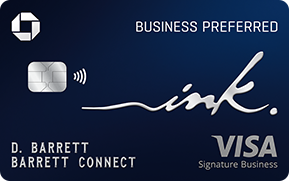
Chase Ink Business Preferred — Best for High Spenders
Annual Fee: $95 | Editor Score: 4.6/5
For solopreneurs with real shipping, advertising, or travel expenses, the Ink Preferred's 3X points on travel, shipping, internet, and online advertising (up to $150K/year combined) can be worth far more than any flat-rate card. If you're spending $2,000/month on Google Ads and $500/month on FedEx, that's $900/year in Ultimate Rewards points at 3X — worth $1,125+ if transferred to travel partners.
The 100,000-point signup bonus ($1,250+ value) is one of the highest available on any business card. Points transfer 1:1 to Hyatt, United, Southwest, and other partners, making this a stealth travel card for business owners who also travel.
Best for: Solopreneurs with $10K+ annual spend on shipping, advertising, or travel.
Pros:
- 100K point signup bonus
- 3X on 4 business-critical categories
- Points transfer to airline/hotel partners
- Cell phone protection ($600/claim)
Cons:
- $95 annual fee
- Reports to personal credit
- Category cap at $150K/yr
Capital One Spark Cash Plus — Best for Scale
Annual Fee: $150 | Editor Score: 4.4/5
When your business outgrows the $25K and $50K caps on the Ink Cash and Blue Business Cash, the Spark Cash Plus delivers truly unlimited 2% back on every purchase — no cap, ever. The $1,200 signup bonus (after $30K in 3 months) is the highest cash back bonus available on any business card.
The catch: this is a charge card, meaning you must pay the full balance every month. That makes it a poor fit for freelancers with irregular income, but ideal for established solopreneurs with predictable cash flow.
Best for: Businesses with $50K+ annual spend and consistent cash flow to pay in full monthly.
Pros:
- Unlimited 2% with no cap
- $1,200 signup bonus
- No foreign transaction fees
- Free employee cards
Cons:
- $150 annual fee
- Charge card (must pay in full)
- Requires excellent credit
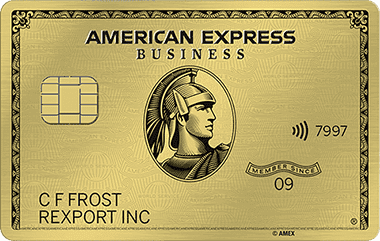
American Express Business Gold — Best for Category Optimization
Annual Fee: $375 | Editor Score: 4.3/5
The Business Gold automatically gives 4X Membership Rewards points on your top 2 spending categories each billing cycle (from a list of 6: airfare, advertising, gas, shipping, computer hardware, and restaurants). It adapts to your spending — no need to track categories yourself.
This makes it ideal for solopreneurs whose spending shifts month to month: heavy on advertising in Q1, heavy on travel in Q3. The adaptive 4X category system captures the highest-value spend automatically. The $375 fee is steep, but $300 in annual statement credits and the 4X earn rate can make it worthwhile for businesses spending $5K+/month.
Best for: Solopreneurs with $60K+ annual spend across multiple business categories.
How We Chose These Cards
Our methodology prioritizes real-world value for small business operators:
- Net annual value — total rewards earned minus annual fee at typical solopreneur spending levels ($2K-$5K/month)
- Category relevance — weighted toward categories freelancers actually use: internet, office supplies, advertising, shipping, gas
- Credit reporting behavior — noted whether each card reports to personal bureaus (important for those building or protecting personal credit)
- Cash flow flexibility — intro APR offers and charge card requirements affect freelancers with irregular income
- Signup bonus accessibility — a $750 bonus after $6K spend is realistic for a solopreneur; a $1,200 bonus after $30K spend is not for everyone
Full Comparison
| Card | Annual Fee | Rewards | Sign-up Bonus | APR |
|---|---|---|---|---|
Chase Ink Business CashChase | $0 | 5% on eligible business essentials up to $25 | $1,000 cash back | 16.74% - 24.74% variable |
American Express Business Gold CardAmerican Express | $375 | 4X in the top two eligible business categories per billing cycle | As high as 200,000 Membership Rewards points | 17.74% - 28.49% variable Pay Over Time APR |
Chase Ink Business PreferredChase | $95 | 3X travel | 100,000 Ultimate Rewards points | 17.74% - 26.74% variable |
American Express Blue Business CashAmerican Express | $0 | 2% on the first $50 | $250 statement credit | 16.74% - 28.49% variable |
Capital One Spark Cash PlusCapital One | $150 | Unlimited 2% on purchases; 5% on eligible Capital One Business Travel hotels | $2,000 | Interest applies to permitted carryover balances; see current issuer rates |