Independent comparisons. No active credit card affiliate partnerships. How we make money · Data status
Best Balance Transfer Credit Cards of 2026
Cards with the longest 0% intro APR periods to help you pay off debt faster.
Last reviewed: 2026-03-30. Card offers can change; check current issuer terms.
Our Top Picks at a Glance

Carrying a balance on a high-interest credit card can feel like running on a treadmill — you make payments every month but the principal barely moves. Balance transfer cards exist to solve exactly that problem. By moving your existing debt to a card with a long 0% introductory APR period, you can pay down principal aggressively without interest eating into every payment. The math is simple: if you're paying 22% APR on a $5,000 balance, you're losing roughly $91 per month to interest alone. A 0% intro period on a balance transfer card turns that $91 into actual debt reduction.
To build this list, we evaluated cards across several dimensions: the length of the 0% intro APR window (the most critical factor for most borrowers), the size of the balance transfer fee, the regular APR after the intro period ends, any ongoing rewards or perks, and the presence of fees like annual charges or penalty rates. We weighted the intro APR period most heavily, since the whole point of these cards is to give you breathing room to pay down debt without the clock running.
The two cards that made our cut for 2026 represent the best options for most people trying to escape high-interest debt. They share a $0 annual fee — which is exactly what you want from a card you may close or stop using after you've paid off your balance — and both offer intro periods long enough to make a real dent in substantial balances. Here's what you need to know.
Wells Fargo Reflect Card — Best Balance Transfer Card Overall
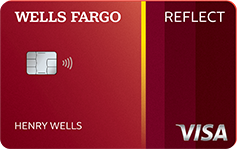
The Wells Fargo Reflect Card leads our list for one reason above all others: it offers the longest 0% introductory APR window available on any mainstream balance transfer card right now. You get 0% APR on both purchases and balance transfers for 21 months from account opening — and if you make your minimum payments on time throughout that period, Wells Fargo extends the intro period by an additional three months, bringing the potential total to 24 months. That's two full years of interest-free debt repayment, which is genuinely exceptional.
To understand what that means in practice, run the numbers. If you transfer a $6,000 balance and have 24 months to pay it off, you need to pay $250 per month to be debt-free at the end of the intro period — with $0 going to interest. At a typical 22% APR, that same $250/month payment would leave you with roughly $2,700 still on the card when the intro period ended. The Reflect Card turns that scenario into a clean slate.
Beyond the headline intro period, the Reflect Card charges no annual fee and includes cell phone protection — a nice perk that covers repair or replacement costs if your phone is stolen or damaged (up to $600 per claim, subject to a $25 deductible, when you pay your monthly cell phone bill with the card). Wells Fargo also offers access to My Wells Fargo Deals, a cash-back program through selected merchants.
Who should get it: Anyone carrying a large balance who wants the maximum possible runway to pay it off. If your balance is high enough that you need more than 18 months to pay it down responsibly, the Reflect Card is your best option.
Biggest downside: There are two real drawbacks. First, this card earns zero rewards — it's a pure debt-payoff tool, not a card you'll want to use for everyday spending once your balance is gone. Second, the regular APR after the intro period ends is 24.49% to 34.49%, which is on the higher end. If you don't pay off your balance before the intro period expires, you could find yourself in a worse position than before. Treat the 24-month window as a hard deadline, not a soft guideline. There's also a 3% foreign transaction fee, so leave this one at home when traveling internationally.
Citi Simplicity Card — Best Balance Transfer Card (No Late Fees)
The Citi Simplicity Card makes a compelling case for the second spot by doing something rare in the credit card industry: it permanently eliminates late fees and penalty APRs. Most credit cards will hit you with a late fee of up to $41 if you miss a payment, and many will jack your interest rate up to a penalty APR — sometimes north of 29% — that can stick around for six months or more. The Simplicity Card removes both of those risks entirely, for as long as you hold the card.
That's a meaningful benefit for someone paying down debt. Life happens — a payment might slip your mind during a stressful month, or you might be juggling several bills and miss a due date by a day or two. On a standard card, that mistake costs you a fee and potentially triggers a rate increase. On the Simplicity Card, it costs you nothing extra.
The intro offer here is 0% APR on balance transfers for 21 months from account opening, plus 0% APR on purchases for 12 months. That's one month shorter than the Reflect Card's standard offer (and three months shorter than its extended offer), but the lower post-intro APR range of 18.49% to 29.24% is a genuine advantage — if you have any balance remaining when the intro period ends, you'll pay less interest than you would on the Reflect Card. The Simplicity Card also carries a $0 annual fee.
Who should get it: People who are disciplined about debt payoff but realistically worry about missing a payment here or there — think busy parents, self-employed folks with irregular cash flow, or anyone who's had a late payment sting them before. The no-penalty-APR guarantee also makes it a better fit if you think there's any chance you won't fully pay off your balance before month 21.
Biggest downside: Like the Reflect Card, the Citi Simplicity earns no rewards whatsoever — not a single point, mile, or cent of cash back on any purchase. It's also worth noting that the balance transfer fee is 3% (minimum $5) for transfers made within the first four months, and 5% (minimum $5) after that — so if you're going to transfer a balance, do it promptly after opening the account. The 3% foreign transaction fee applies here too.
How We Chose These Cards
We evaluated balance transfer credit cards using a framework built around what actually matters for someone trying to pay down debt. The introductory APR period length received the highest weight — an extra few months can mean hundreds of dollars in avoided interest on a mid-size balance. We also looked closely at balance transfer fees, since a 5% fee on a $10,000 transfer costs $500 upfront and can offset much of the benefit of a long intro period. Annual fees were an automatic disqualifier for this category; there's no reason to pay a yearly fee on a card you're using purely to eliminate debt. We assessed regular APR ranges after the intro period, cardholder protections (including late fee policies and penalty APR structures), and any ancillary benefits like cell phone coverage. We did not heavily weight rewards programs, since the primary purpose of these cards is debt elimination, not points accumulation. Cards were cross-referenced against current publicly available terms as of early 2026.
Frequently Asked Questions
How does a balance transfer actually work?
You apply for a balance transfer card and, once approved, request that the new card pay off one or more of your existing credit card balances. The amount transferred — plus any balance transfer fee — becomes your new balance on the new card. If the new card has a 0% intro APR period, you pay no interest on that transferred balance during the promotional window. You still owe the money; the transfer just buys you time to pay it down without interest compounding against you. Most issuers let you initiate the transfer during the application or shortly after approval.
What's the balance transfer fee, and is it worth paying?
Most balance transfer cards charge a fee of 3% to 5% of the amount you transfer. On a $5,000 transfer, that's $150 to $250 upfront. Whether it's worth it depends on what you're currently paying in interest. If your current card charges 22% APR on that $5,000 balance, you're paying roughly $91 per month in interest — so even a $250 transfer fee pays for itself in about three months. Over a 21-month intro period, avoiding 22% APR on $5,000 saves you well over $1,000, making the fee an obvious trade.
What happens if I don't pay off the balance before the intro period ends?
Your remaining balance starts accruing interest at the card's regular APR — which on these cards ranges from 18.49% to 34.49% depending on your creditworthiness and the specific card. This can be a rude awakening, especially on the higher end of that range. The best approach is to divide your transferred balance by the number of intro months and set that as your monthly payment goal. Treat the deadline as firm.
Will applying for a balance transfer card hurt my credit score?
Applying for any new credit card triggers a hard inquiry, which typically drops your score by a few points temporarily — usually five points or less. However, opening a new account also increases your total available credit, which can actually improve your credit utilization ratio (how much of your available credit you're using). If your utilization is high because of the balance you're transferring, the new account's credit limit may partially or fully offset the inquiry's impact. Most people see any credit score impact from a balance transfer card stabilize or reverse within a few months.
Can I transfer a balance from a card issued by the same bank?
No. Credit card issuers will not allow you to transfer a balance from one of their own cards to another one of their own cards. If you have a Citi credit card with a balance, you cannot transfer it to the Citi Simplicity Card. You'll need to transfer from a card issued by a different bank. Make sure to check the issuer of your existing cards before applying for a balance transfer card, so you don't end up in a situation where the transfer isn't permitted.
Full Comparison
| Card | Annual Fee | Rewards | Sign-up Bonus | APR |
|---|---|---|---|---|
Wells Fargo Reflect CardWells Fargo | $0 | None | None | 17.49%, 23.99% or 28.24% variable |
Citi Simplicity CardCiti | $0 | None | None | 17.49% - 28.24% variable |